Full removal is slower and messier than skimming, so it is normally chosen for a specific reason: the ceiling is being opened up for rewiring or lots of downlights, the coating is flaking away, or a buyer or surveyor has asked for it to be gone rather than covered. Once it is off, there is no textured layer left to deal with in future.
The coating is never dry-sanded or power-scraped. It is softened, either with a steam stripper or a gel or paste stripper left to soak in, then lifted off with a scraper while still damp. The board underneath is usually marked and needs filling, and a finishing skim is often applied afterwards. If a test shows asbestos, the work follows HSE methods and the waste is handled as hazardous.
What is included
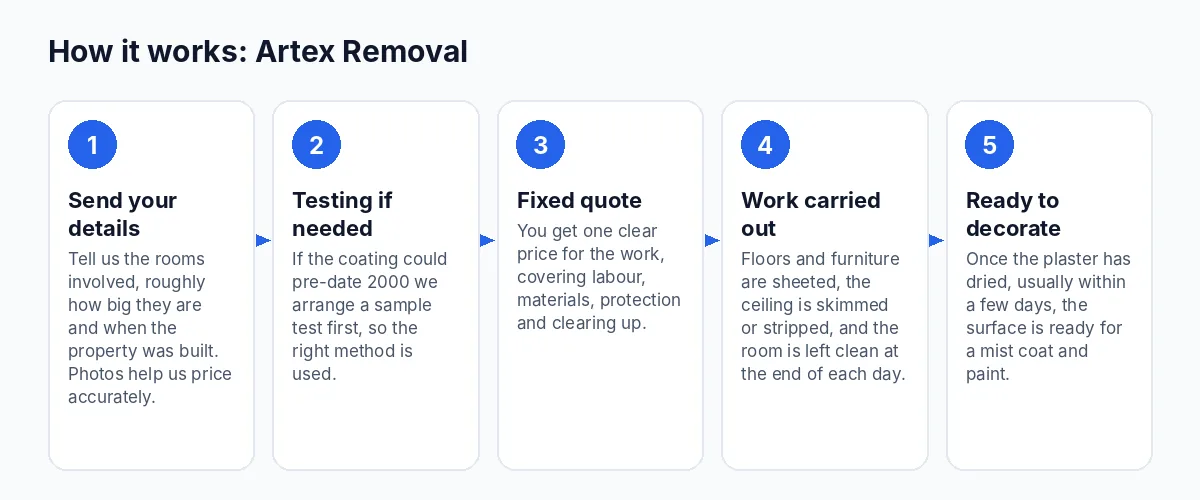
- Asbestos testing or confirmation of a negative result before work begins
- Full sheeting of floors and furniture, with doorways sealed
- Softening the coating with steam or a gel stripper
- Wet scraping the coating off the board or plaster
- Bagging the waste and removing it from site
- Filling, repairing and, where needed, skimming the stripped surface
- Cleaning down the room at the end of the job
Who it is for
- Ceilings being opened for rewiring or new lighting
- Flaking or delaminating textured coatings
- Restoration of original lath and plaster ceilings
- Owners who want no coating left above the plaster
- Walls where a textured finish is being taken back for tiling or panelling
How much does it cost?
As a guide, full removal of non-asbestos Artex usually costs £25 to £45 per square metre, plus making good. Removal of asbestos-containing coatings is usually £50 to £100 per square metre plus hazardous waste disposal. See our full cost guide.