Skimming is the standard way to get rid of the look of Artex. Rather than taking the coating off, the plasterer knocks back the sharpest peaks with a scraper, seals the surface so it does not suck the moisture out of the new plaster, then applies a coat to fill the pattern and a final finishing coat that is trowelled flat and polished. Because nothing is sanded, the job creates very little dust.
The key decision is how much preparation the ceiling needs. A shallow stipple can often be filled and finished in one visit, while deep swirls or heavy fan patterns need more scraping back and a thicker build-up. If the coating has not been tested, the peaks should not be scraped until a sample has come back, because scraping is a way of disturbing it. A test result decides how the preparation is done.
What is included
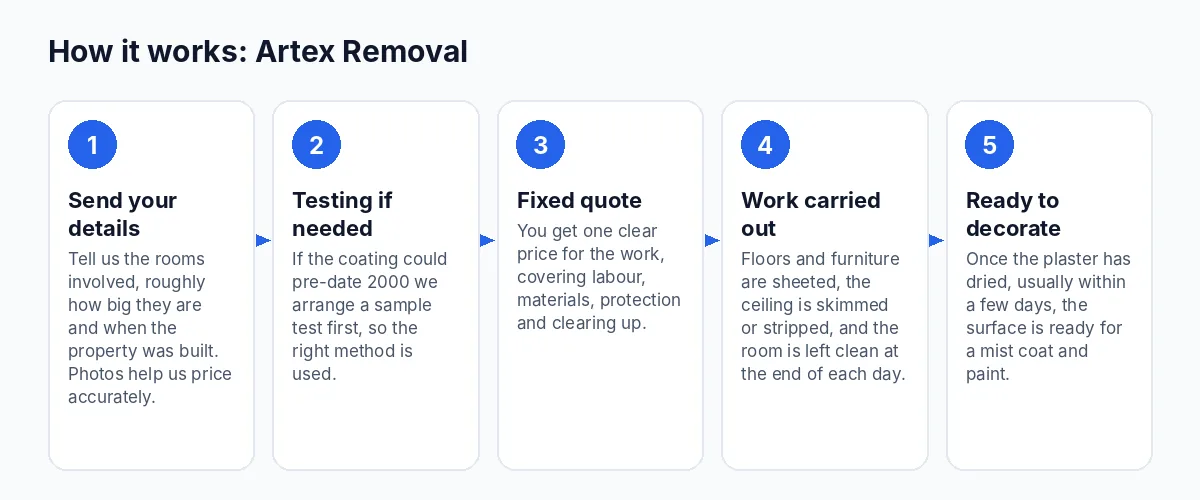
- Sheeting floors and furniture, and masking doorways, windows and light fittings
- Isolating and removing light fittings and fitting temporary covers
- Knocking back high points by hand once any asbestos question has been answered
- Sealing the surface with a suitable primer or bonding agent
- A fill coat to level the pattern, then a finishing coat trowelled smooth
- Plaster beads or scrim tape on cracks and edges where needed
- Clearing up at the end of each day and removing waste
Who it is for
- Swirl, stipple, comb, fan and bark Artex ceilings
- Coatings that may contain asbestos and are better left sealed in
- Homeowners updating rooms before decorating or selling
- Landlords refreshing a property between tenancies
- Ceilings that are sound, with no sagging or loose boards
How much does it cost?
As a guide, skimming over Artex usually costs £250 to £450 for a small room ceiling, £300 to £550 for a bedroom and £400 to £700 for a living room, with deep patterns and high ceilings at the upper end. See our full cost guide.