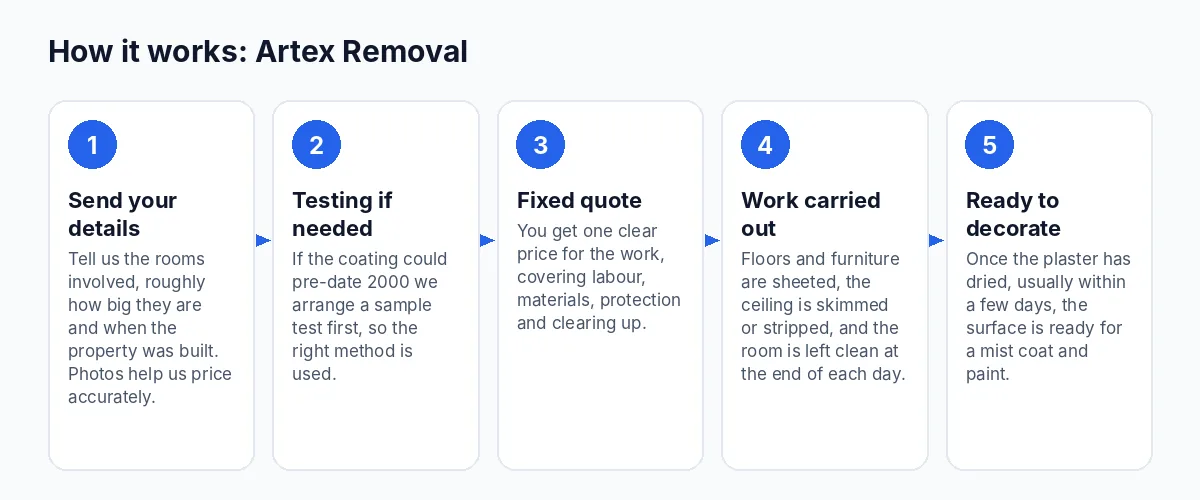
Asbestos in textured coatings is usually a small amount of chrysotile, bound into the material. HSE treats these coatings as lower risk than many other asbestos materials, and in good condition, left alone, they pose very little risk. The danger comes from sanding, dry scraping, power tools or drilling without controls, which can release fibres into the air and spread them through the rest of the house.
That is why the default recommendation for a positive result is encapsulation: sealing the coating under a skim of plaster or new plasterboard so it stays undisturbed. Where it must come off, HSE classes most textured coating removal as non-licensed work, and larger scale removal with steam or gel as notifiable non-licensed work, which must be notified to HSE, carried out by trained workers under medical surveillance and properly recorded.
What is included
- Reviewing the lab result and the condition of the coating
- Encapsulation by skimming or overboarding where suitable
- Removal using controlled wet methods by trained operatives where required
- Notification to HSE where the work is notifiable non-licensed work
- Personal protective equipment and controlled work area
- Double-bagging and labelling of asbestos waste
- Disposal through a registered carrier to a permitted site, with consignment paperwork
Who it is for
- Any coating that has come back positive on a lab test
- Rooms where you want a smooth finish without disturbing the coating
- Ceilings that must be opened up for structural or electrical work
- Landlords and managing agents who need a documented approach
- Properties being sold, where a buyer wants to know how it was handled
How much does it cost?
As a guide, encapsulating asbestos-containing Artex under a skim usually costs about the same as a normal Artex skim, while removal usually costs £50 to £100 per square metre plus hazardous waste disposal. See our full cost guide.